
Disinherit spends renown
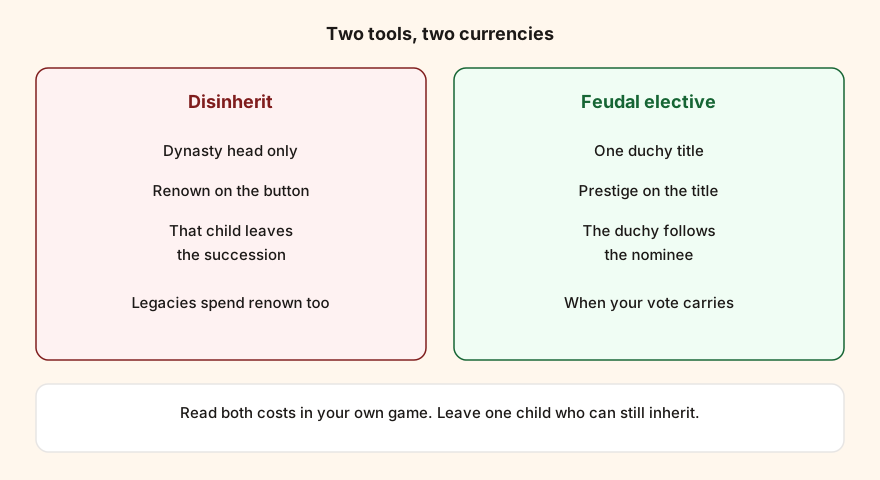
Disinherit belongs to the dynasty head. The button lists the renown, and any other cost printed on that same button. Read the whole cost, then confirm. Legacies spend renown as well, so each disinherit is a legacy pushed later.
The child leaves the succession. The interaction describes the opinion they keep toward you. One removal is a single cut. Leave a child who can still inherit. A line with no suitable heir ends the campaign.
The number on the button can change with the dynasty and with how you are related. When you are choosing between two children, read both buttons in the same sitting.
Vote a duchy you hold outright
Feudal elective is a law on one title. Add it to a duchy, kingdom, or empire from that title's screen. The prestige cost is the number on that screen. Feudal rulers can take the law, and some traditions open it too. The screen names the requirement that applies to you.
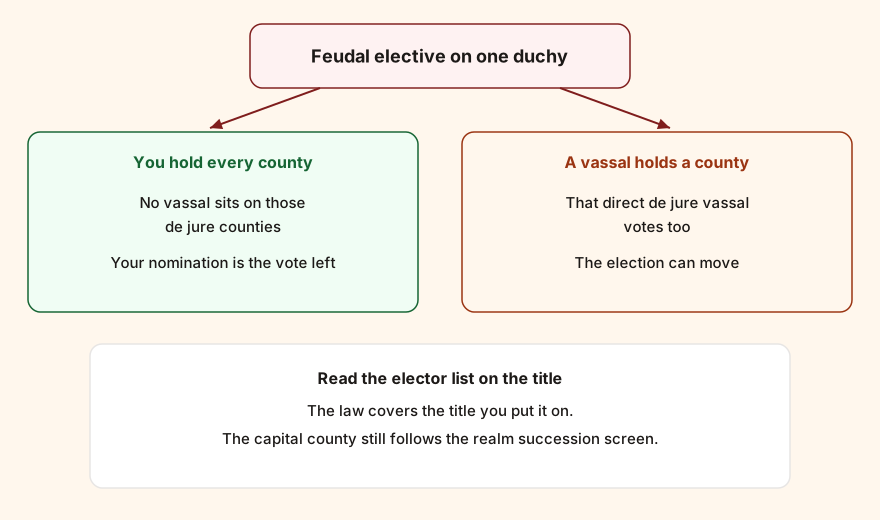
The voters are the title holder and the direct de jure vassals one or two ranks below the title. When every de jure county of that duchy is in your hands, those counties have no vassal on them to cast a vote. Your nomination is the vote that remains. Name the child who should receive the duchy.
A vassal who holds one of those counties votes too, and the election can move. Use a duchy whose counties are still in your domain, and read the elector list on the title before you trust the result.
The law covers the title you attached it to. The capital county still follows the realm succession screen, and the player heir is the person that screen names for the primary title. Read both on the same day. For a first use, put the law on a second duchy and leave the primary title on the realm law you already understand.
Pick one tool for this heir
Use disinherit when one child would take a same-rank title and the renown on the button is a price you accept. Use the duchy vote when you want that land to reach a chosen child and you can hold the counties yourself.
The succession course names the laws. The partition page is the grants you make before either of these buttons.
| Tool | You spend | You get |
|---|---|---|
| Disinherit | Renown shown on the button | That child leaves the succession |
| Feudal elective on one duchy | Prestige shown on the title | That duchy follows the nominee when your vote carries |
Crusader Kings 3 · What is · Beginner · Succession · Governments · Faith · Warfare · Intrigue · First century · Hybrid culture · Traditions · Partition · Men-at-arms · Domain · Dynasty · Education · Marriage · Court · Activities · Chapter V · By God Alone · Silk and Silver · Patch 1.19 · Hegemony · EU5 converter · FAQ · Sources · Items · Ark · Reichskrone · Iron Crown · Papal Tiara · Justinian · Sword
Official site: crusaderkings.com.