
Spoilers: Kislev succession and the game’s Frozen Falls encounter. No campaign ending.
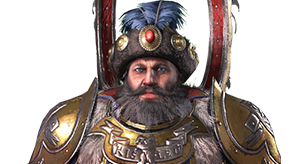
The Ursun Revivalists
Boris Ursus leads the Ursun Revivalists, a Kislev faction in the Warhammer III base game. SEGA’s Immortal Empires ownership guide, updated 18 June 2026, lists him with Tzarina Katarin and Kostaltyn. He is a melee lord. War Bear Riders are the mounted arm that fits his army, while Kossars and Streltsi still need a line in front of them before they can shoot. A Frost Maiden supplies the Ice or Tempest magic he does not cast. A Patriarch brings the hymns.
Patch 6.1 removed the old requirement to finish a Realm of Chaos rescue battle before a player could select him in Immortal Empires. Warhammer III owners start that sandbox campaign directly. The selection rule is not the same event as the story battle in which the Ice Court finds him.
Boris Bokha, father of the Ice Queen
Katarin rules after the apparent loss of her father, Boris Bokha, also called Boris Ursus. The two names are one man: the tzar her succession looks back to, and the champion of Ursun the Revivalists take as their lord. She leads The Ice Court. He leads a different faction. Starting one campaign does not write the history of the other.
Kostaltyn’s Great Orthodoxy is a third base-game campaign, religious rather than royal. Mother Ostankya’s Daughters of the Forest are the Shadows of Change route. Boris is not a hero in his daughter’s army, and he is not the Supreme Patriarch. The race is shared. The faction, and the reason for fighting, are not.
Ursun’s faith as a campaign
His campaign identity is the worship of Ursun and the preparation of Kislev for war against Chaos. The faction still uses the shared Kislev systems: Court & Orthodoxy, provincial Devotion, invocations and Ataman governors. Devotion and a hymn are campaign tools. They are not a claim that every sandbox victory is the bear-god’s verdict.
On the field he stays with the fighting line. The bears answer large threats and flanks. The gunners and bowmen need that contact before their shots have a useful target. Leaving Boris and the cavalry in a distant fight, while the rest of the army meets another enemy, splits the force his leadership is supposed to hold together.
The game’s frozen tzar
Katarin’s quest line presents a Frozen Falls battle in which Boris is preserved in ice and threatened by Tzeentch’s servants. That scene belongs to the game’s story. It is why her crown sits on an apparent loss, and it is a different fact from the patch 6.1 rule for starting his Immortal Empires campaign.
The Realm of Chaos gives Kislev a narrative about the fate of Ursun. Immortal Empires places the Revivalists in the sandbox with every other unlocked lord. Alliances, conquests and defeats in either mode are that campaign’s results. They are not a chronicle of Kislev outside the game.
Boris Ursus: gameplay and availability · More character stories
Sources
- Immortal Empires DLC Ownership Guide — support.sega.com
- Total War: Warhammer III patch 6.1 — community.creative-assembly.com